
The Workplace Relations Commission (WRC) carries out inspections to check that employers are complying with employment rights and employment permit legislation. The purpose of an inspection is to verify that employers are meeting their legal obligations and maintaining the required employment records.
Inspections may be announced or unannounced. Where an inspection is announced, the WRC generally provides at least 14 days’ written notice.
This guide explains what to expect during a WRC inspection, the documents inspectors are likely to review, the most common compliance issues identified by the WRC, and the practical steps employers can take to reduce risk and remain inspection-ready.
Preparing for the Inspection
- Complete the WRC Employee Details Form for all current employees and those who left employment during the previous 12 months.
- The form includes information such as employee details, employment dates, job title, hours worked, pay and employment permit status (where applicable).
- Review your records carefully before submitting the form and identify any gaps or areas of non-compliance.
- Where possible, take reasonable steps to correct any issues before the inspection and be open with the Inspector about any corrective action taken.
- If a document cannot be located (e.g. a contract of employment), issue a replacement using the current date, ensure it accurately reflects the employee’s terms and conditions, and do not backdate the document.
- A cooperative and transparent approach, together with evidence that issues have been addressed, will help demonstrate a commitment to compliance.
Focus of the Inspection
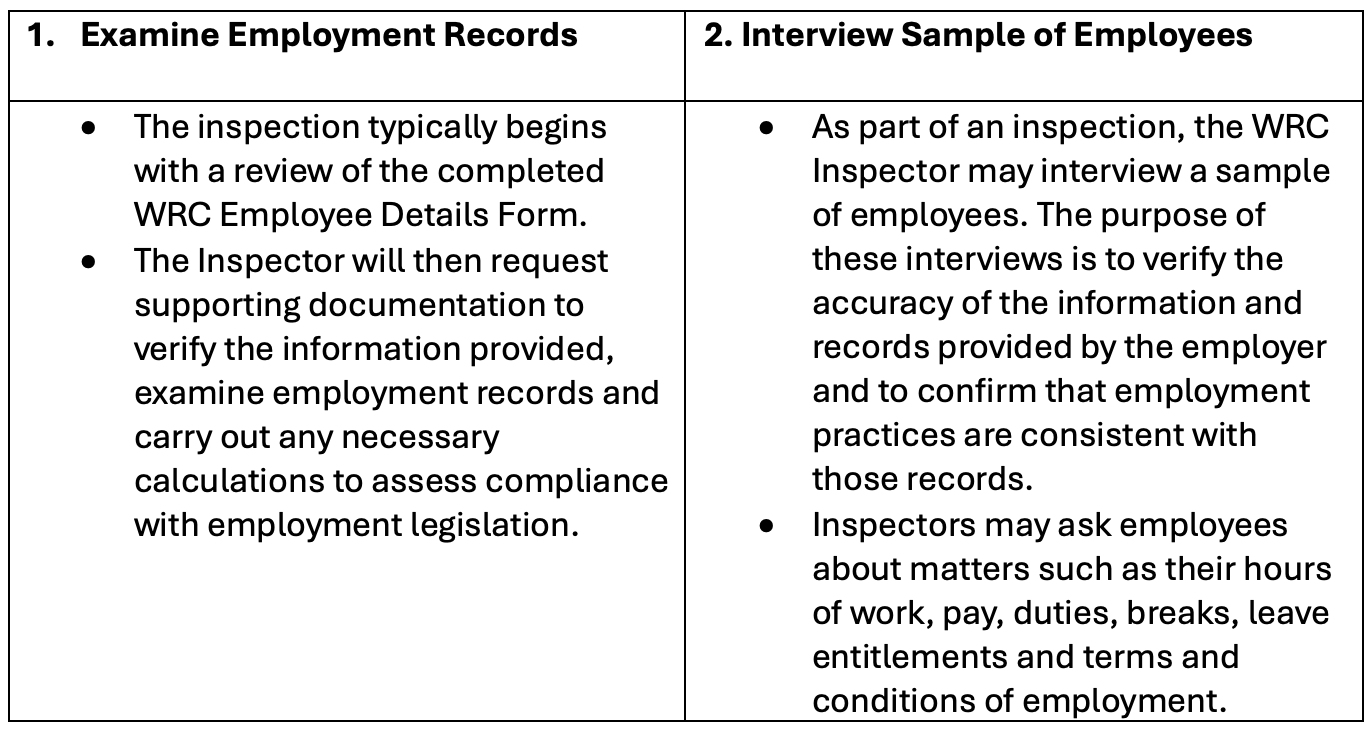
A WRC inspection typically focuses on two key areas:
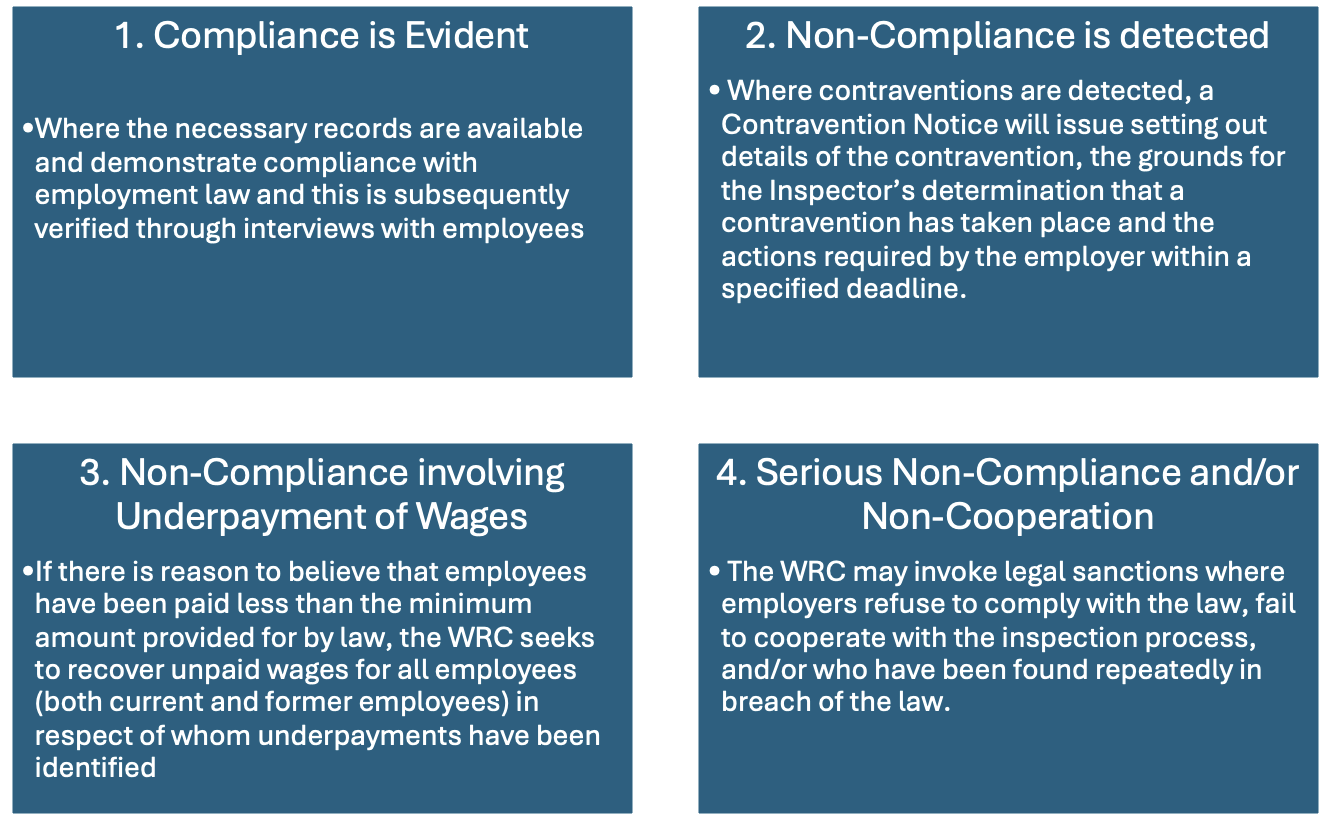
Possible Outcomes
Common Compliance Gaps
In a recent webinar, the WRC outlined 5 key common compliance issues they find at WRC inspections:
- Records not kept or incomplete
- 5 day statements (core terms) or Terms and Conditions of employment not issued
- National Minimum Wage not paid
- Public holiday entitlement not paid
- Employment Permit Act 2024 breaches: employing people without a permit or providing false or misleading information in a work permit application.
Essential HR records and documentation
The WRC Inspector will typically begin by reviewing the completed WRC Employee Details Form before requesting supporting documentation to verify the information provided. The documents requested may include (but are not limited to):
- Contracts or written statements of terms for employees
- Payroll records and payslips
- Time records showing hours worked
- Annual leave records
- Public holiday entitlement records
- Evidence of compliance with minimum wage requirements
- Records relating to statutory leave (maternity, paternity, parental, parents, adopted, carer’s leave)
- Employment permits – proof of legal entitlement to work
- Details of employees currently working, including start dates and job roles
Best processes and practices that help de-risk your organisation:
- Maintain accurate records: ensure employment, payroll and working time records are complete, up to date and easily accessible.
- Review compliance regularly: carry out periodic checks to identify and address gaps before they become compliance issues.
- Train managers: ensure managers understand key employment law obligations and follow agreed HR processes.
- Keep documentation current: update contracts, policies and employee records promptly when changes occur.
- Be inspection ready: maintain records in a format that can be produced quickly and cooperate openly with the WRC, addressing any issues identified.
A proactive approach to HR compliance can help reduce risk and make any future WRC inspection far less disruptive.
At Voltedge Management, we support organisations with HR audits, policy reviews, manager training and employment law compliance. If you’d like to review your current HR practices or prepare for a WRC inspection, our experienced HR consultants are here to help. Contact us at info@voltedge.ie or call 01 525 2914 to find out more.
Carmel Brennan, HR Consultant